

Even a well-planned move can feel overwhelming. There are boxes to pack, bills to transfer, deadlines to meet, and a new place to get used to. The good news is that managing moving stress mostly comes down to planning ahead, breaking the work into small tasks, and getting the right help. Whether you are doing it yourself or using residential moving services, these practical tips will help you stay calm and in control.
Key Takeaways
- Plan early and break the move into small tasks.
- Declutter first to reduce the workload.
- Pack in short, scheduled blocks.
- Use professional help for the heavy work.
- Rest, eat, and take breaks on moving day.
Why Is Moving House So Stressful?

Moving combines several stress triggers at once: tight timelines, physical work, money decisions, and big life changes. Common causes of moving stress include:
- Too many tasks and no clear plan
- Last-minute packing and rushed decisions
- Unexpected costs or delays
- Worry about damage or lost belongings
- Leaving a familiar home and adjusting to a new one
Knowing what is causing the pressure makes it easier to deal with, because each cause has a practical fix.
Start With a Clear Plan
Planning a house move is the biggest stress reducer. A simple moving house checklist keeps everything in one place.
- Set your moving date and deadlines. Work backwards from moving day.
- List every task. Include packing, booking movers, utility transfers, and your change of address.
- Assign dates. A weekly packing schedule is easier to follow than a big pile of tasks.
- Set a budget. Include relocation expenses such as packing supplies, truck rental, or professional help.
Our moving day checklist can help you cover the basics without missing steps.
Declutter Before You Pack
Sorting household items first means fewer boxes and less to carry. Go room by room and sort into keep, donate, sell, and discard. Start with rooms you rarely use, such as storage areas or the garage. The less you move, the less there is to manage.
Make Packing Less Overwhelming
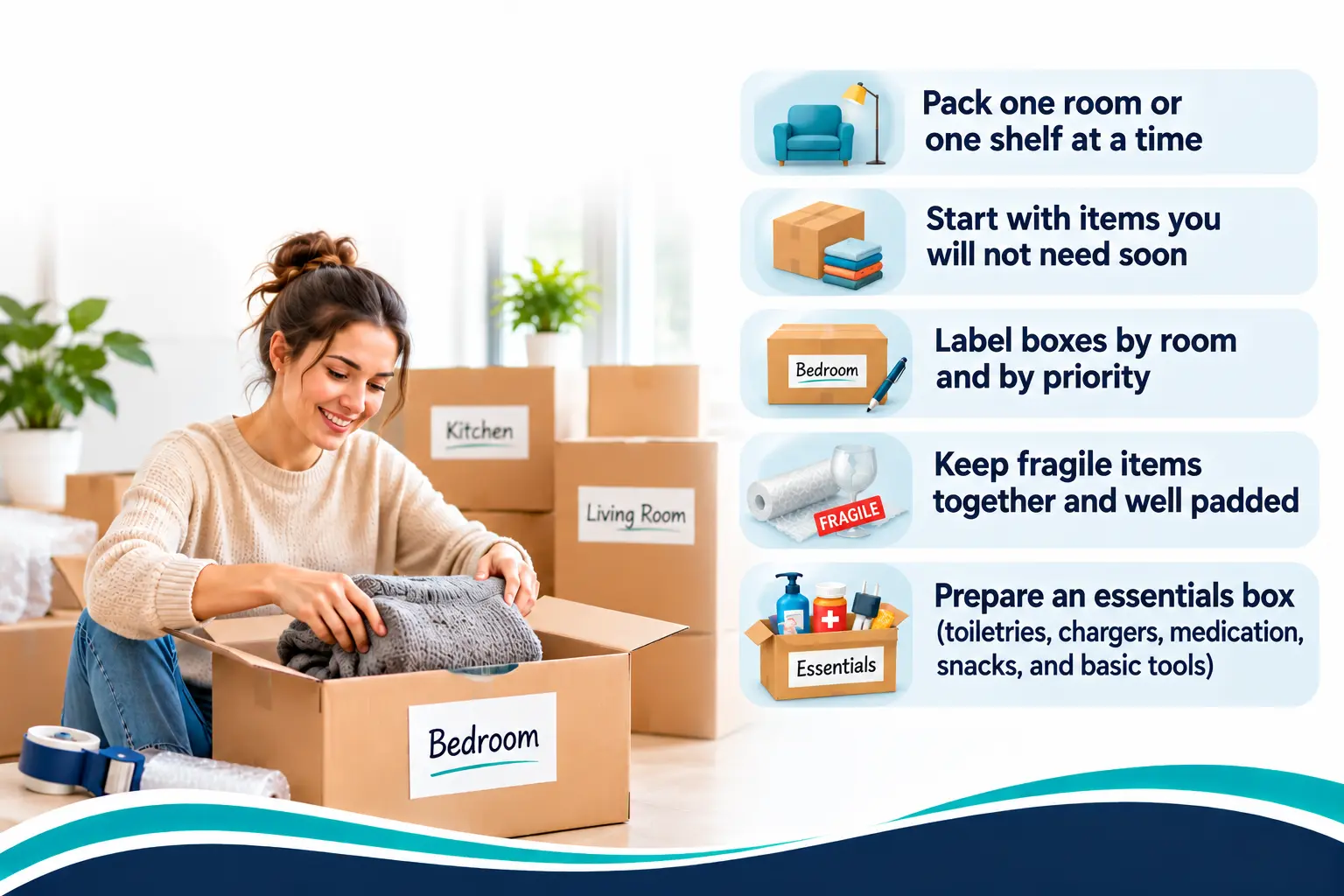
If you are wondering how to avoid feeling overwhelmed while packing, work in small, scheduled blocks.
- Pack one room or one shelf at a time.
- Start with items you will not need soon.
- Label boxes by room and by priority.
- Keep fragile items together and well padded.
- Prepare an essentials box with toiletries, chargers, medication, snacks, and basic tools.
Staying organized when moving also means keeping a simple inventory of valuable items, so you can check everything arrived safely.
Get Help Where It Counts
You do not have to do everything yourself. Professional movers can take on the heaviest and most time-consuming parts, which is often what makes a move feel manageable.
For moves within the same area, local moving services can keep things quick and simple. Before you hire, check what is included, such as loading, transportation, and unloading, and ask for a written quote. If you are searching for a trusted moving company in Surrey, ask about the process, how fragile items are handled, and how the crew communicates on the day.
If you are relocating a business or a home office, commercial moving services may be the better fit for equipment and workspace needs.
Handle Last-Minute Moving Stress
Even with a plan, things can go off track. If you are short on time:
- Focus on essentials first: documents, medication, valuables, and daily-use items.
- Pack room by room, starting with the largest spaces.
- Ask friends or family for specific help, such as packing the kitchen.
- Keep calm by taking short breaks to rest and eat.
Our last-minute moving tips have more ideas for tight timelines.
Stay Calm on Moving Day

Moving day stress is easier to manage with a few habits:
- Get a good night’s sleep. Tired people make rushed decisions.
- Keep your essentials with you. This includes keys, wallet, phone, and documents.
- Confirm parking and access. Reserve elevators or loading areas if you live in a building.
- Be available. Walk the crew through the home and share any special instructions.
- Do a final walk-through. Check every room, cupboard, and closet.
Settle Into Your New Home
After the move, resist the urge to unpack everything at once. Make a simple unpacking plan:
- Set up the bedroom first, so you can rest.
- Unpack the bathroom and kitchen essentials next.
- Handle other rooms gradually.
Small touches, like familiar bedding or photos, help a new home feel comfortable sooner. If feelings of anxiety do not ease after the move, speaking with a doctor or counsellor can help.
Frequently Asked Questions
Why is moving house so stressful?
It involves many tasks, tight deadlines, physical effort, and emotional change, all at the same time.
How can I reduce stress when moving to a new home?
Plan early, declutter, pack gradually, and get help with heavy lifting. Keep essentials with you and give yourself time to settle in.
What is the best way to organize a stress-free move?
Use a checklist with dates, label every box, and keep important documents in one place. A written plan makes it easier to see progress.
How can I avoid feeling overwhelmed while packing?
Pack one small area at a time and set a daily time limit. Starting with items you do not use often takes the pressure off.
What should I do to stay calm on moving day?
Rest the night before, keep your essentials close, confirm access and parking, and take short breaks during the day.
What are the most common causes of moving stress?
Poor planning, last-minute packing, unexpected costs, and worry about belongings are the most common.
Final Thought
Managing moving stress starts with a plan and a steady pace. If you want help with the heavy lifting, HR Moving can talk through your move and answer your questions. Contact us for a quote.