
Moving important documents safely is one of the easiest things to overlook while you are busy with boxes, furniture, and truck bookings. Passports, mortgage papers, and tax records are hard to replace if they go missing, and they are often needed right in the middle of a move. Whether you are using professional residential moving services or handling the packing yourself, a little planning keeps your paperwork protected from start to finish. This guide covers what to sort, how to pack it, and how to carry it safely in British Columbia.
Key Takeaways
- Carry originals yourself and do not put them on the truck.
- Sort, scan, and shred before packing.
- Use waterproof, lockable containers with simple labels.
- Back up important files digitally with strong security.
Which Essential Documents Should You Keep With You?
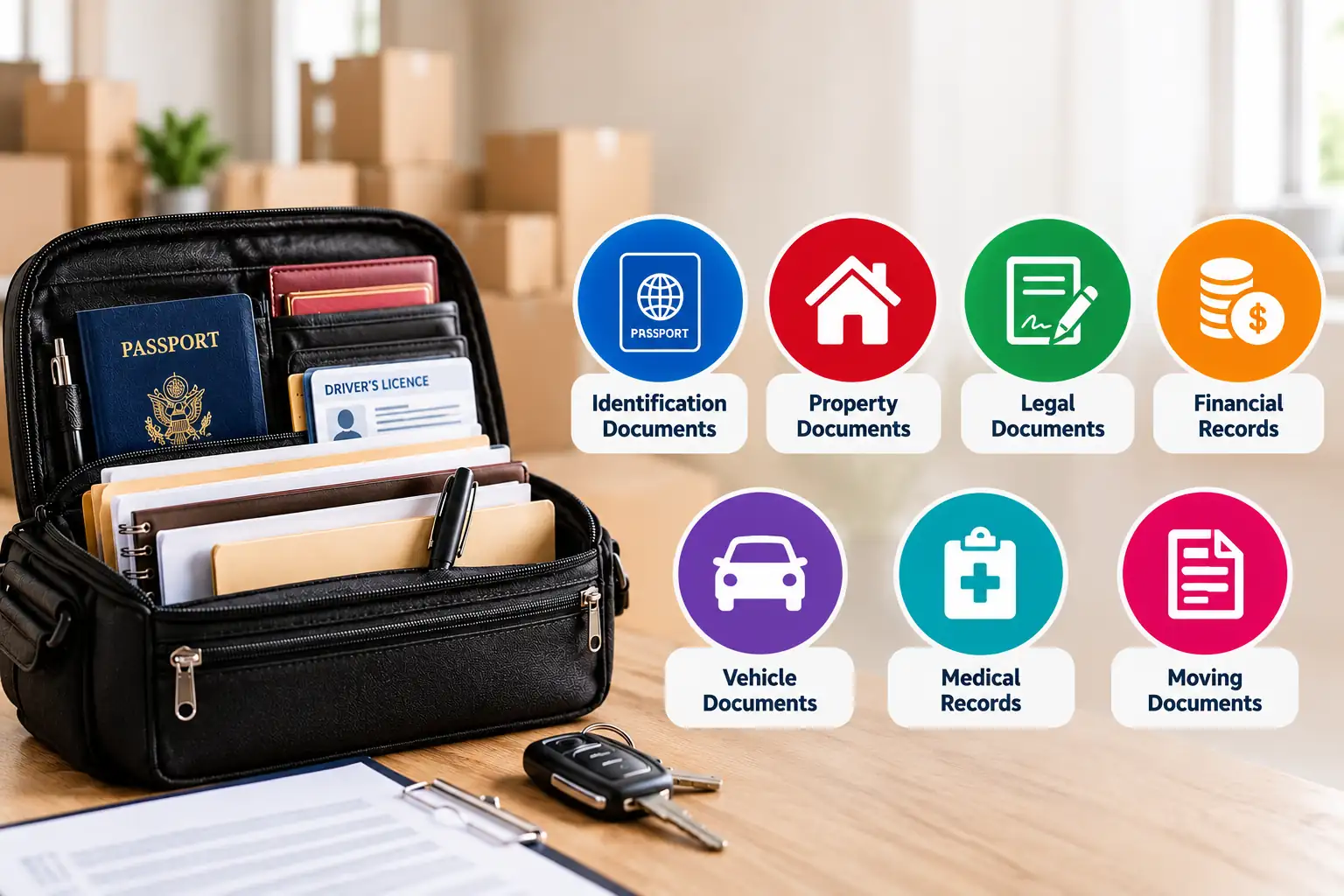
The simple rule: if losing it would cause a serious problem, it travels with you, not on the moving truck.
Keep these in your personal bag or car:
- Personal identification documents (passports, driver’s licences, citizenship or immigration papers)
- Mortgage paperwork, lease agreements, and property documents
- Legal paperwork such as wills, powers of attorney, and contracts
- Bank statements and recent financial records
- Vehicle registration documents and insurance papers
- Medical records and prescriptions
- Moving contracts, quotes, and receipts
Documents you rarely need, such as old tax returns, can go in a clearly labelled box. These are the essential documents for moving that deserve extra attention.
1. Sort and Reduce Before You Pack
Moving is a good time to cut down on paper. Go through your files and separate them into three groups: keep, scan, and shred.
- Keep: Current and legally important papers.
- Scan: Anything you want a copy of for convenience.
- Shred: Expired or unnecessary papers containing personal information.
Check current guidelines for how long to keep tax and financial records, and keep anything you are unsure about.
2. Make Digital Backups
A digital document backup is your safety net. Scan key papers or take clear photos, then save the files to an encrypted drive or a trusted cloud account protected by a strong password and two-factor authentication.
Scanned document copies do not replace originals, but they make it much easier to get replacements if something goes wrong. Avoid emailing sensitive files to yourself without protection.
3. Pack Important Documents Safely
Good document packing tips are simple but worth following:
- Use proper containers. A waterproof document folder or fireproof document bag protects against spills, rain, and dampness. A sturdy, lockable secure storage box works well for larger files.
- Organize by category. Use a document organizer or folders with file labels such as “Banking,” “Property,” or “Insurance.”
- Keep paperwork flat and dry. Avoid overstuffing, and never store papers loose in a bag.
- Make a quick list. Note what is inside each folder so you can spot anything missing.
- Label clearly, but discreetly. Mark the container for yourself, but avoid writing “passports” or “financial records” on the outside.
Packing supplies like these can be added to your moving checklist. Our moving day checklist is a helpful companion when you are planning.
4. Transport Documents Safely
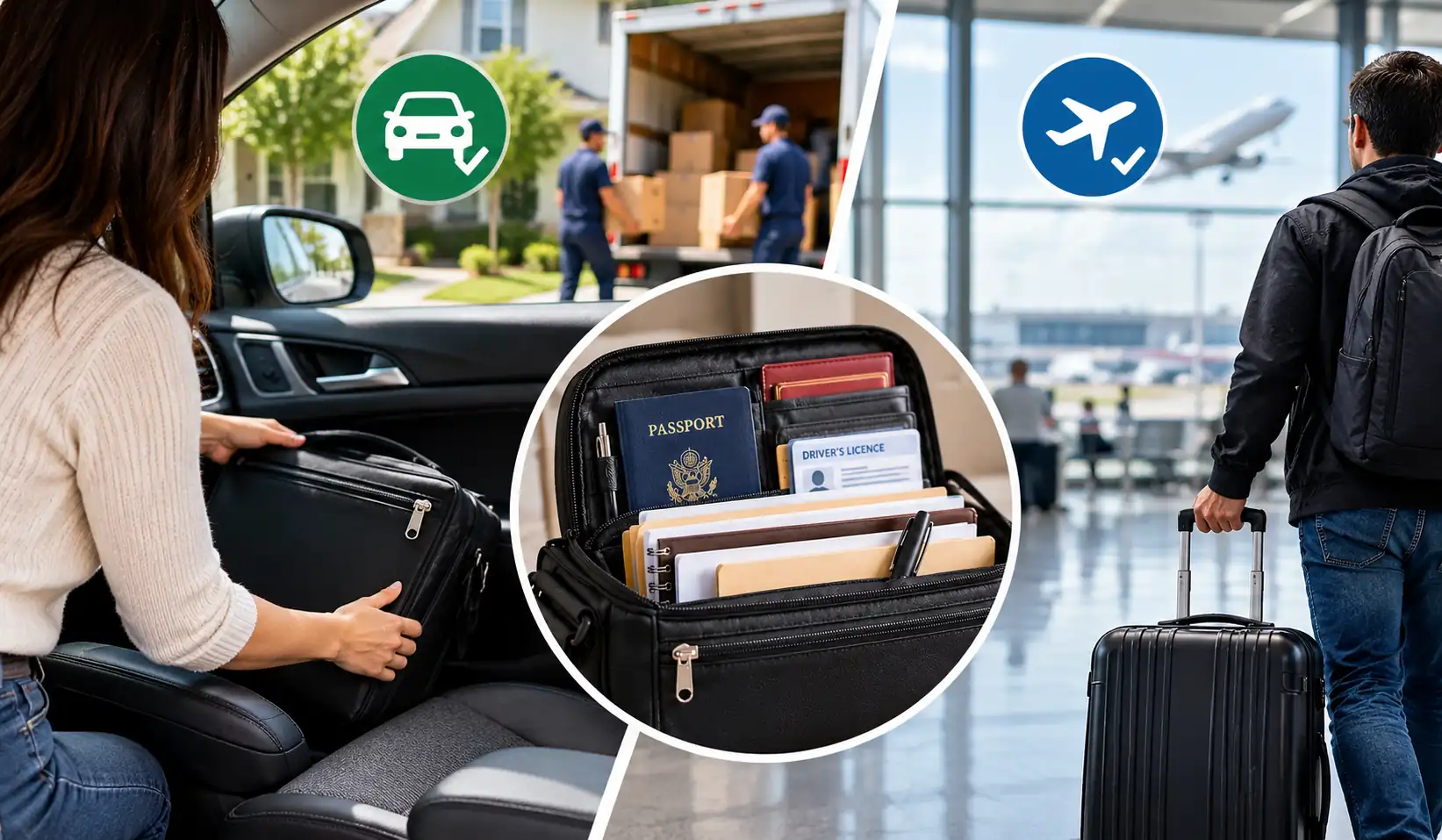
How to transport documents safely depends on your move.
For a local move
If you are using local moving services, carry your document box or bag in your own vehicle. Keep it with you, not in the trunk of a parked car or in the cab of a truck.
For a long-distance move
Longer trips mean more time between locations. If you are using long-distance moving services, keep originals with you, and never ship them with household goods. If you are flying, carry them in your hand luggage. Courier or registered mail is an option for certain papers, but only with tracking and insurance.
5. Think About Your Essential Moving Box
Pack one clearly marked essentials box for the first day in your new home. It can hold a few documents you need quickly, such as your lease or keys paperwork, along with chargers, medication, and basic toiletries. Keep this box with you on moving day.
Document Safety on Moving Day
On the day itself, a few habits help:
- Tell family members which bag holds the documents.
- Keep the bag in sight, not on the curb or in a hallway.
- Do a final check of drawers, desks, and shelves before the crew leaves.
- If you hire movers, confirm in advance that important papers are packed separately from items going on the truck.
When choosing a mover, working with a trusted moving company in Surrey means clear communication about what is being loaded and what stays with you.
Frequently Asked Questions
How should I store my important documents?
Use a waterproof and, ideally, fireproof container, organized by category. Keep the originals in a secure place and store digital copies on an encrypted drive or protected cloud account.
What not to keep when moving?
Skip expired documents, duplicates, and papers you no longer need. Shred anything with personal details instead of recycling it. Do not load originals such as passports or legal papers on the moving truck.
What are the essential things to pack when moving?
Beyond documents, pack medication, chargers, a change of clothes, toiletries, basic tools, snacks, and valuables in an essentials box you carry yourself.
How to keep your documents safe while moving?
Sort first, make digital backups, pack in a waterproof folder or secure box, and carry them with you. Do not leave them unattended.
What is the best way to handle confidential documents?
Keep them in a locked container, limit who handles them, and shred anything you no longer need. For sensitive digital files, use strong passwords and encryption.
Final Thought
Moving important documents safely comes down to three habits: sort them, protect them, and keep them with you. If you want help planning the rest of your move, the team at HR Moving is ready to talk through your needs. Contact us for a quote and move with a little less to worry about.