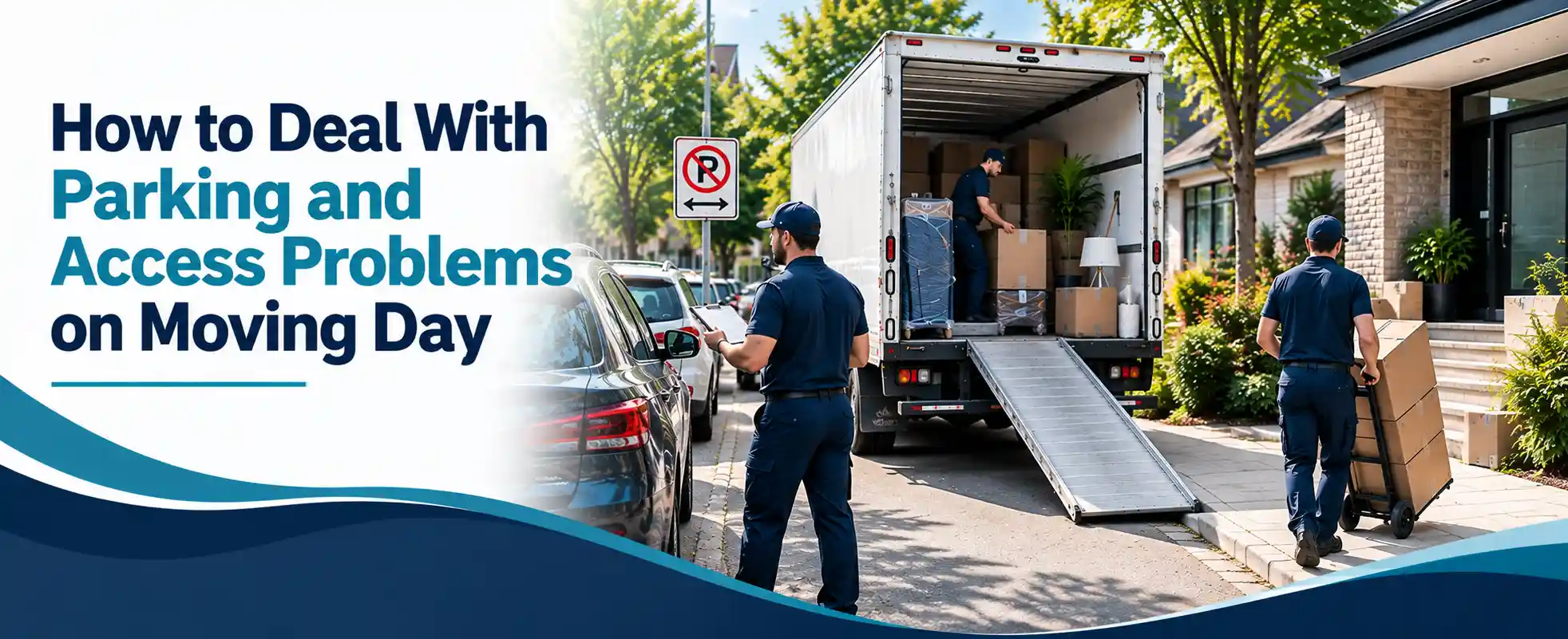
You’ve packed every box, labeled every room, and hired a solid crew, then moving day arrives and there’s nowhere to park the truck. Parking problems on moving day are one of the most common, and most avoidable, reasons a move runs late or costs more than it should.
Having coordinated moves across busy city blocks, tight cul-de-sacs, and high-rise buildings, one thing is consistent: the smoothest moves are the ones where parking and access were planned days in advance, not figured out on the spot.
Why Parking Matters More Than People Expect
A moving truck loading and unloading isn’t like parking a car for an errand. Crews need consistent, close access to the entrance for hours at a time. Every extra ten feet between the truck and your door adds time, effort, and, if you’re paying hourly, cost. Poor access is also one of the leading causes of scheduling delays for local movers, since a truck stuck circling the block puts every other job that day behind schedule.
1. Check Local Parking Restrictions Early
Before moving day, look into parking restrictions on moving day for your specific street. Many cities enforce street cleaning schedules, permit-only zones, or time-limited parking that could get your truck ticketed or towed mid-move. A quick call to your local parking authority or a look at posted signage on your block will tell you what you’re working with. Our Local Movers team handles this kind of research as part of every residential job, so nothing is left to guesswork on moving day.
2. Ask About a Moving Truck Loading Zone
Many municipalities allow temporary loading zones for moving trucks, but you typically need to request one in advance. If your street has designated loading zones, confirm hours of use and whether a moving day parking permit is required to hold the space legally.
3. Apply for a Temporary Parking Permit if Needed
If you live in a dense neighborhood, applying for temporary parking for a moving truck is often the safest way to guarantee space. Most city offices allow you to reserve a stretch of curb for a specific date and time window, sometimes with a small fee, sometimes free with proper notice. Apply at least one to two weeks ahead, since processing times vary.
4. Coordinate With Your Building Management

For apartment moving parking, don’t assume street parking will be available near the entrance. Contact your building manager to ask about designated loading areas, freight elevator access, and whether other residents need to be notified. Elevator access on moving day is just as important as street parking, since a reserved elevator window keeps your move from competing with regular building traffic. Commercial buildings often have their own rules for this, which is why our Office Movers team coordinates loading dock and elevator scheduling directly with the building ahead of time.
5. Use Cones, Signs, or a Placeholder Vehicle
If you can legally reserve a spot, mark it early. Traffic cones or a parked car can prevent other vehicles from taking the space your truck needs later. Just avoid blocking a hydrant, driveway, or marked no-parking zone.
6. Plan for Narrow Streets and Tight Access Points
Narrow street moving situations call for extra coordination. If your street can’t fit a full-size truck, ask about using a smaller shuttle vehicle from a wider drop-off point, common in older neighborhoods with tight lanes.
7. Communicate With Your Moving Company Ahead of Time

Reliable movers will ask about moving company parking and access before your move date, but raise it yourself if they don’t. Send photos of your street, note stairs or gate codes, and flag anything unusual about building access for movers.
If you’re managing a workplace relocation, access planning gets even more detailed, since loading docks, freight elevators, and building hours all need to line up. Our Office Moving Checklist walks through exactly what to plan for before a commercial move.
At HR Moving, we work with customers ahead of every move to map out parking and access details, so our trucks are exactly where they need to be when the crew arrives, whether it’s a home move or a commercial relocation.
Frequently Asked Questions
How do I reserve parking for a moving truck?
Contact your city’s parking office to request a temporary loading zone or permit, ideally one to two weeks in advance.
Do I need a parking permit for a moving truck?
In many cities, yes, especially in permit-only or metered zones. Check local regulations before your move.
What should I do if there is no parking available on moving day?
Look for the nearest legal loading zone, consider a shuttle vehicle for narrow streets, and let your moving company know so they can plan around it.
How much space does a moving truck need to park?
Most residential moving trucks need roughly 20 to 26 feet of curb space, plus clearance to lower a ramp or lift gate.
How can I prevent other vehicles from blocking the moving truck?
Reserve the space early with cones or a placeholder vehicle where legally allowed, and notify neighbors in advance.
Final Thoughts
Parking and access issues are one of the easiest moving day problems to prevent, and one of the most disruptive when ignored. A little research and a few phone calls before your move date can save hours of stress and unexpected costs. At HR Moving, we help customers plan every detail, from truck placement to building access, so moving day goes exactly as planned.