
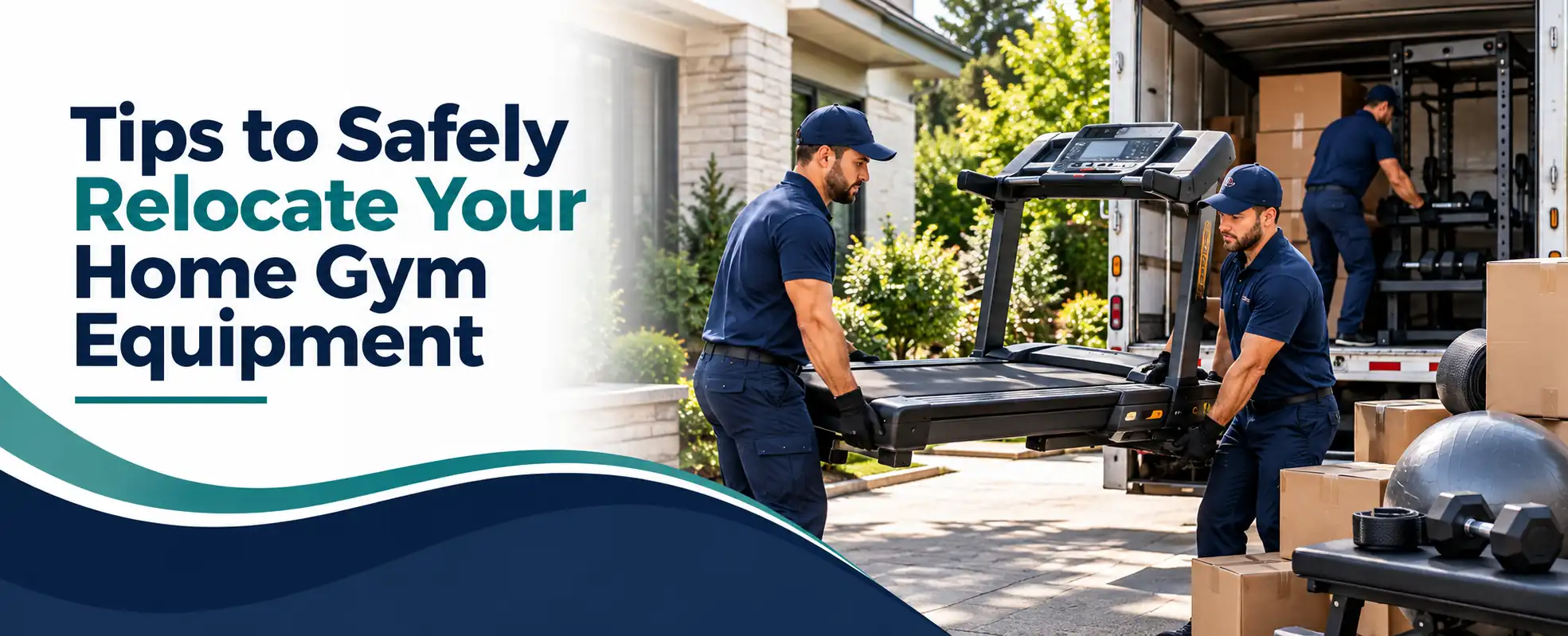
Moving home gym equipment is not like moving a sofa or a box of books. Weight machines, benches, and treadmills are heavy, awkward, and full of small parts that are easy to lose. The good news is that with the right prep, you can relocate your home gym without damaging the equipment, your floors, or your back. Whether you are planning the move yourself or booking residential moving services, this guide walks you through how to move gym equipment step by step.
Key Takeaways
- Plan before moving, and measure every route.
- Disassemble where possible, and label all hardware.
- Wrap, lift, and load with care.
- Ask for help with the heaviest equipment.
Start With a Plan
Before you pick up a single weight, take stock of what you own.
- List every piece, from the multi-gym machine to resistance bands and fitness accessories.
- Note the approximate weight and size of the heaviest items.
- Check your instruction manuals, or look up digital copies online.
- Measure doorways, hallways, and stairs at both homes.
If you are hiring help, share this list upfront. Heavy fitness equipment moving often needs extra people and the right tools, so mention it when you request a quote. Add the gym to your moving checklist so it does not get left to the last minute. Our Moving Day Checklist is a good place to start.
Gather the Right Packing Materials
Proper gym equipment packing protects both the equipment and your home. You will likely need:
- Protective wrapping and bubble wrap for frames, screens, and finished surfaces
- Moving blankets or furniture pads
- Small, sturdy boxes for weights and accessories
- Zip bags and labels for hardware
- Lifting straps and a hand truck
- Strong tape and markers
How to Move Heavy Gym Equipment Safely
1. Disassemble Where Needed
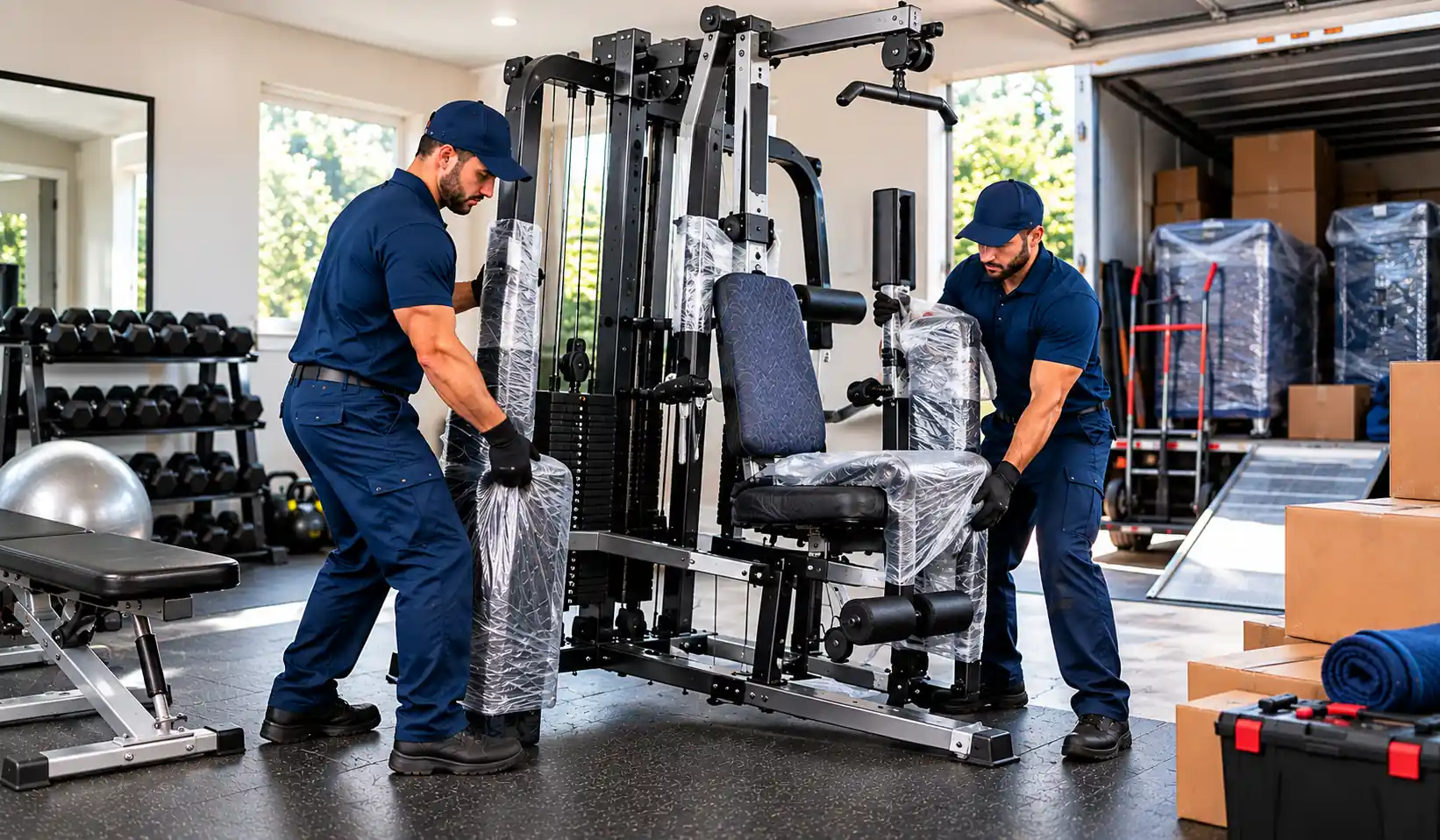
Equipment disassembly makes moving heavy gym equipment safely much easier. Use the manual if you have one, and take photos at each stage. Remove cables, seats, handles, and weight stacks where the design allows.
Put screws, bolts, and pins into labelled bags, and tape each bag to the matching part. Loose components go missing quickly, and a lost bolt can delay your fitness room setup.
2. Protect Every Surface
Wrap padded seats, frames, and electronic consoles. Use bubble wrap for delicate parts and blankets for larger frames. Secure the wrapping with tape that will not leave residue on the equipment.
3. Lift With Care
Heavy lifting is where most injuries and damage happen. Bend at the knees, keep the load close, and never carry something that feels too heavy alone. Lifting straps help spread the weight, and a hand truck or dolly makes transporting heavy workout machines far safer.
4. Protect Your Floors and Walls
Lay down floor protection and keep your path clear. Take doors off hinges if needed, and have someone guide you through tight corners.
Specific Equipment Tips
Dumbbells and plates: Use several small boxes rather than one large one. A big box of weights can split or become too heavy to lift. Fill any gaps with towels or paper so nothing shifts.
Weight benches: Fold or adjust the bench if possible, remove detachable pads, and wrap the frame to protect surfaces.
Treadmills and cardio machines: Unplug them, secure moving parts as the manual advises, and protect the console. These are often best handled by two or more people.
Resistance bands and small accessories: Keep them together in one labelled box so they are easy to find.
Load and Transport Carefully
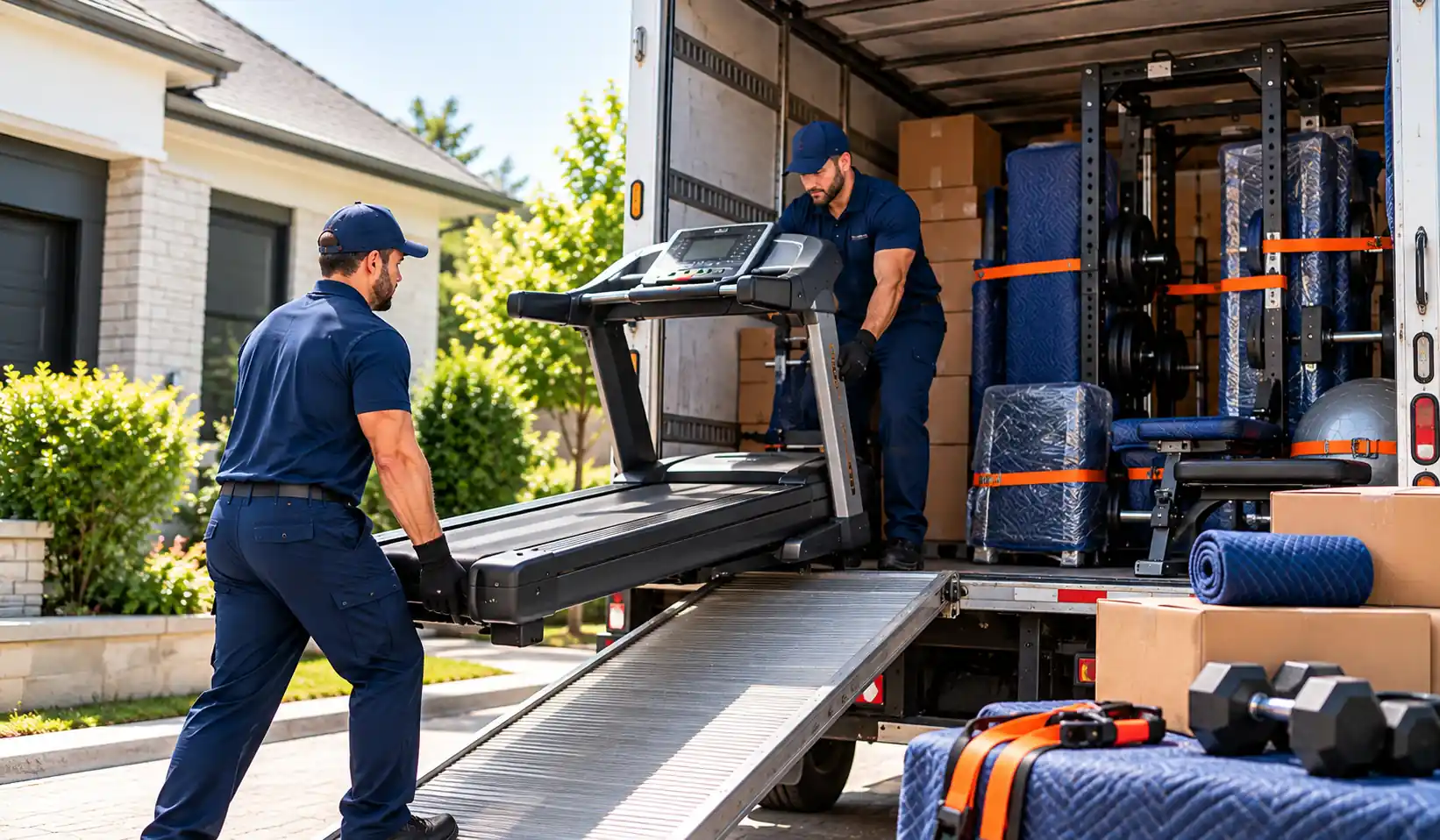
Secure transportation protects your equipment on the road. Load the heaviest items first, keep them low, and use straps or blankets to stop them sliding. Do not stack heavy items on delicate machines.
If you are moving across town, local moving services can save you time and effort. Looking for moving services in Surrey or nearby communities? Explain what equipment you have so the crew can plan for it.
Reassemble and Set Up
Once you arrive, decide where each machine will go before you carry it in. Check that the floor can handle the weight, especially upstairs. Reassemble using your photos and manual, tighten all bolts, and test every piece before use.
Final Thought
Moving home gym equipment takes planning, patience, and the right tools, but it is manageable with a clear process. If you would rather have help with the heavy parts, the team at HR Moving can talk through your move and your equipment. Get in touch for a quote.
Frequently Asked Questions
How to move a heavy piece of gym equipment?
Disassemble it where possible, wrap each part, and use lifting straps or a hand truck. Get a second or third person to help.
What’s the best way to pack dumbbells for moving?
Use several small, strong boxes and fill any empty space. Keep each box light enough to lift safely.
How to transport heavy gym equipment?
Load it low and secure it with straps and blankets so it cannot shift. Use ramps or a dolly instead of lifting heavy items into a truck.
How do you move your home gym?
Make a list of your equipment, gather packing materials, take machines apart, label parts, and plan your route. Reassemble and test everything at your new home.
How to move a weight bench?
Fold it if possible, remove the pads, and wrap the frame. Two people should carry it, especially if it is a heavy-duty model.